History
History & Heritage
Organized in 1776, The Historic First Baptist Church of Williamsburg carries a sacred legacy of faith, freedom, courage, worship, and community.
Our story began with courageous enslaved and free Black worshippers who wanted to worship God in their own way.
The history of First Baptist Church is more than a timeline. It is the story of prayer, song, preaching, sacred gathering, community building, freedom, faith, and endurance across generations.
As Williamsburg, Virginia, and the nation prepare for historic commemorations, First Baptist Church continues to share a sacred story rooted in worship, resilience, freedom, and descendant memory.
More Than a Place. A Sacred Story.
First Baptist Church carries a history shaped by worship, courage, family, community, and the ongoing work of preservation.

Faith
A worshipping congregation grounded in prayer, Scripture, praise, and service.

Freedom
A story of courage among enslaved and free Black believers seeking sacred gathering.

Worship
A legacy carried through preaching, singing, testimony, and spiritual strength.

Community
A church family connected to education, service, civic life, and neighborhood memory.

Descendants
A sacred inheritance preserved through records, oral history, family memory, and research.
Founded in Faith.
The First Baptist Church of Williamsburg was organized in 1776 by a courageous group of enslaved and free Black people who desired the freedom to worship God in their own way.
First led by Rev. Moses, a free Black itinerant preacher, early worshippers gathered at Green Spring Plantation, a few miles from town. There, they built a brush arbor where they could come together for song, prayer, and sacred worship.
By 1781, the worshippers were organized as Baptists under Rev. Gowan Pamphlet, an enslaved man in Williamsburg. The congregation later moved to Raccoon Chase, a rural area just outside Williamsburg.
As their hymns and prayers stirred hearts, a member of the Cole family, Williamsburg landowners, offered the group use of a carriage house on Nassau Street as a meeting place. Rev. Gowan Pamphlet continued to serve as pastor until his death around 1807.
What Was a Brush Arbor?
A brush arbor was a cleared outdoor worship space made with posts secured in the ground and covered with branches and limbs. The structure helped shelter worshippers from the weather while also helping conceal gatherings from view.
A Congregation That Continued to Rise
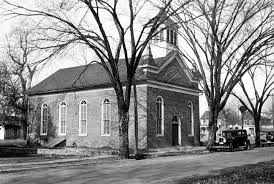
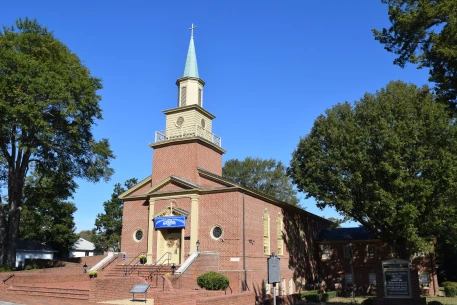
Before the Civil War, the congregation became known as the African Baptist Church. In 1856, the congregation dedicated a new brick church near the Nassau Street carriage house, which became its church home for the next century.
In 1863, the church was renamed First Baptist Church of Williamsburg. Since 1956, the present church at 727 Scotland Street has served as the congregation’s worship home.
Today, First Baptist Church remains both a living congregation and a sacred historic witness, welcoming members, visitors, descendants, researchers, families, students, and community partners into the continuing story of faith and freedom.
Key Moments in Our Journey
This timeline preserves the major points from the church’s existing history while presenting them in a clear visitor-friendly format.
The Church Is Organized
A group of courageous enslaved and free Black worshippers organized what became First Baptist Church of Williamsburg, seeking to worship God in their own way.
Rev. Moses and the Brush Arbor
Under the early leadership of Rev. Moses, worshippers gathered at Green Spring Plantation in a brush arbor for song, prayer, and sacred fellowship.
Organized as Baptists
The worshippers were organized as Baptists under Rev. Gowan Pamphlet, an enslaved man in Williamsburg who became one of the congregation’s early pastors.
A Rural Gathering Place
The congregation moved to Raccoon Chase, a rural area just outside Williamsburg, where worship continued through hymns, prayer, and community.
The Cole Family Carriage House
A member of the Cole family offered the congregation use of a carriage house on Nassau Street, giving the worshippers a more established meeting place.
A New Brick Church
The African Baptist Church dedicated a new brick church near the Nassau Street carriage house, which served as the congregation’s church home for approximately 100 years.
Renamed First Baptist Church of Williamsburg
During a period of national transformation, the congregation became known as the First Baptist Church of Williamsburg.
The Scotland Street Church
The present church at 727 Scotland Street began serving as the congregation’s worship home.
250th Anniversary Season
The FBC250 season offers a historic opportunity to honor the church’s founding, preserve descendant memory, welcome visitors, and share this legacy of faith and freedom with future generations.
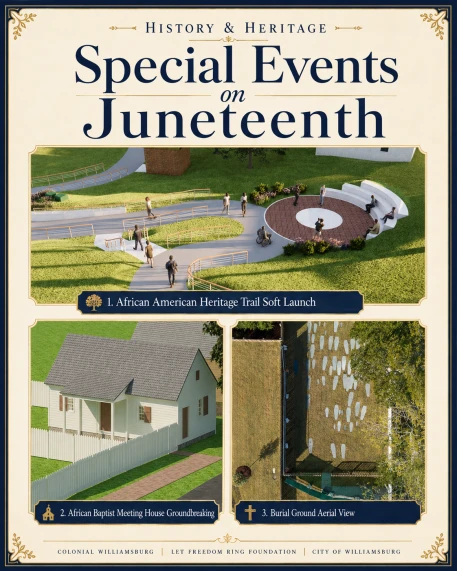
The Nassau Street site is one of the most sacred chapters in the church’s history. It connects the congregation’s story to worship, community life, burial grounds, archaeology, descendant memory, and the public recovery of Black sacred history in Williamsburg, Virginia.
Today, preservation work, historical research, oral history, archaeology, and community partnerships continue to help recover and share the deeper story of the people who worshipped, served, lived, and were laid to rest there.
Since 1776: The History of First Baptist Church of Williamsburg, Virginia
This book shares how courageous enslaved and free Black worshippers moved from the shelter of the brush arbor to openly profess Baptist doctrine and establish a church that has flourished for generations.
Books are available for purchase. Call (757) 229-1952 for more information. All proceeds benefit First Baptist Church.
Book Price: $20.00Still Worshipping. Still Serving. Still Telling the Story.
First Baptist Church is not only a historic landmark. It is a living church community where worship, discipleship, service, fellowship, and sacred memory continue.
Worship With Us
Join us as we continue the spiritual legacy of praise, preaching, prayer, and Christian fellowship.
Visit and Learn
Visitors are invited to explore the history of the church through guided tours and meaningful storytelling.
Preserve the Legacy
Our history continues through documents, photographs, oral histories, family stories, and descendant memory.
Preservation, Research, and Descendant Memory
The story of First Baptist Church continues to be preserved through historical research, church records, oral history, archaeology, family memory, photographs, artifacts, and community partnerships.
We honor the known names, the unnamed ancestors, the pastors, the families, the worshippers, the children, the elders, the builders, the teachers, the freedom seekers, and the faithful stewards whose lives shaped this sacred legacy.
As more history is recovered, the church remains committed to telling the story with reverence, accuracy, dignity, and care.
Experience the Legacy of Faith and Freedom
We welcome visitors, descendants, families, students, researchers, churches, and community groups to learn more about the sacred history of The Historic First Baptist Church of Williamsburg.